We are one of FOE's local groups, organised like other groups in Wales through FOE Cymru, whose office is in Cardiff - Castle Arcade Balcony, tel 029 20229577. Contact us, Barry&Vale FoE via greenkeith 'at' virginmedia.com, tel. 07716 895973

Wednesday, 15 May 2019

FOE Campaigning to cut Plastic Pollution

Friends of the Earth Barry&Vale see the declaration of plastic-free towns, as Penarth, to have little bite.  Replacing plastic covering on a few items by a small fraction of traders does not merit a 'plastic-free' title.
The Surfers-against-Sewage campaign was out-distanced by the new single-use plastics directive agreed by the EU last December, which will enter into force by mid-2021 [1].  FoE wants Britain to sign up to this, come Brexit or not.

The directive targets the top 13 products most commonly found on beaches – plastic plates, cutlery, expanded polystyrene food containers, cups, straws and cotton buds are all banned.
In Britain, the Phase-out of Plastic Pollution Bill, which has been drawn up by Friends of the Earth and the National Federation of Women’s Institutes (NFWI), was presented to Parliament by Alistair Carmichael MP in January, with support from a cross party group of MPs.
Max Wallis FOE member in Penarth says pressure is needed to pass this new law, tightened up by the parliamentary process, to ensure tough and timetabled action to tackle the crisis in plastic pollution.
The Phase-out of Plastic Pollution Bill, includes:
  • A statutory long-term target to phase out all but the most essential uses of plastic by 2025.
  • Add further categories to the European list of products (plastic sachets, disposable coffee cup lids etc.)
  • Establish an independent advisory Committee on Plastics Pollution to advise on policy measures to achieve the targets and develop a list of essential plastic uses.
                                                Friends of the Earth Barry&Vale  14 May 2019


[2] https://friendsoftheearth.uk/plastics/new-bill-cut-plastic-pollution-presented-parliament 

Thursday, 6 December 2018

Archaeology celebrated in Senedd - ignoring destruction of major site at Five Mile Lane

Short debate 5th December in the Senedd on The Neolithic in the Story of Wales: Valuing the achievements of prehistory (NDM6891) was led by David Melding, AM for South Wales Central.  neolithic = later Stone Age ranging from around 4,500BC to 1,700BC.  David Melding began:
“I want to start with Tinkinswood in the Vale of Glamorgan. It is one of my favourite places. I’ve walked there and spent time there, read poetry there, discussed eruditely, I hope, with some Members in this Chamber, indeed, whilst pondering and looking at that monument. It does remind me, anyway, of the amazing achievements of our ancestors in prehistory. I believe it is really important that we respect and celebrate these achievements.”


So how no mention of the Five-Mile-Lane site, a few km from Tinkinswood, which all authorities including CADW and the GlamGwent Archaeological Trust allowed to be bulldozed this year, despite initial investigations showing a wealth of structures and burial sites? 
The commissioned archaeologists and GGAT got their fees and kept findings quiet till late on, so the WG-bulldozers could complete their work and the VoG Council could claim "too late" to change the new roadway plans.   https://jacothenorth.net/blog/tag/five-mile-lane/

How could the Senedd debate the general matter without recognising the crime on their watch?

Archaeology major discovery and destruction of remains
video  https://youtu.be/o2CRUv8eexc    Narrator: Karl-James Langford
Facebook site:   Barry destroyed heritage at Five Mile Lane
http://www.barryanddistrictnews.co.uk/news/16163151.Ancient_artifacts_from_3500BC_discovered_at_Five_Mile_Lane/

A wide range of very significant evidence for the archaeology and history of the area from early prehistory (3500BC) through to the Roman period (1st to 4th centuries AD). Finds include:
• Prehistoric Bronze Age barrows (burial mounds) and cremations
• Prehistoric Iron Age settlement enclosure with roundhouses and field system
• Roman metalworking site - Iron smelting and smithing
• Roman villa previously excavated in the 1960s and 1970s

Monday, 26 November 2018

FoE lobbies Jane Hutt AM over the M4 mega-roadbuild

Our deputation saw the Vale AM, Jane Hutt, at her recent surgery to press opposition to the M4 'relief' road through the Gwent Levels.
# it's a very high cost, displacing other very worthwhile projects; the £1500 million is just a starting figure, to be increased by 3-years inflation, adding on VAT to over £1700million plus cost over-runs (50% common on major road projects).  Jane agreed from her time as Finance Minister that Wales cannot reclaim the VAT.
# 'Active travel ' measures were hardly considered at the Inquiry, yet Bus and Metro enhancements all show much higher benefit:cost ratio.  The Inquiry Inspector just narrowly followed the Westminster (and Welsh) planning rules and accepted the flawed modelling of car use and cost-saving
# Removal of the Severn Bridge tolls will increase traffic with the environmental costs in air pollution and extra CO2 emissions; the Welsh Government has an obligation to combat these - the High Court requires soonest possible action - so must introduce measures to restrict and deter car use, which would have to reduce existing traffic levels.
# The Future Generation Act requires projects like the M4 to show environmental gain as well as economic gain.  This project's environmental disbenefit makes it unlawful, as the FG Commissioner argues.
# the Welsh Assembly has to consider the aspects ignored by the Inquiry so should insist on referring the project to a full scrutiny process - to cover the wider active travel measures, the inadequacies of government modelling and the FG Act - rather than rush to decision as Carwyn Jones wants before he quits as First Minister pre-Xmas.

Keith Stockdale said for FoE Barry&Vale that Jane Hutt seemed most positive to our arguments; she stressed she's opposed to the Pendoylan link to the M4.  We would encourage others to write and/or lobby her in the next week or so over the Newport M4 decision.

Sunday, 25 November 2018

Swansea Tidal Lagoon - huge penalties for El-consumers

Utility Week and Private Eye (2 Nov) have reported on huge demands for subsidy that the Welsh government wanted to keep hidden (FoI refusal). 
The BEIS Department has lifted non-disclosure agreements on several documents and disclosed key points of TLP’s request for financial support from the Welsh government.The company requested £200 million loan funding from Welsh government at a two per cent interest rate and up to £261.1 million in annual equity down payments over 35 years.In return, TLP offered the Welsh government 90 per cent ownership of the lagoon at the end of the 35-year project’s proposed contract for difference when it would still owe up to £822.3 million worth of outstanding debt.The Welsh government would have also taken on the costs of maintenance and turbine replacement after about 50 years of operation as well as any decommissioning liabilities.
The government earlier released a summary of their value-for-money assessment that makes the following points:
  • The proposed tidal lagoon at Swansea Bay would have a capital cost more than 3 times as much, per unit of electricity, as the Hinkley Point C nuclear power station.
  • It would cost only around £400m to use offshore wind instead to generate the same power as the proposed £1.3bn lagoon at Swansea Bay.
  • The entire proposed programme of tidal lagoons – consisting of 6 lagoons – would cost approximately 2 and a half times the cost of Hinkley, to produce around the same amount of electricity.
  • Enough offshore wind to provide the same generation as the proposed programme of lagoons is estimated to cost at least £31.5bn less to build.
  • The entire proposed programme of tidal lagoons could cost up to £20 billion more to produce the same quantity of electricity compared to generating that same electricity through a mix of offshore wind and nuclear.
  • The proposed programme of tidal lagoons could cost the average household consumer up to an additional £700 between 2031 and 2050.
  • The additional cost of this proposal on household bills is the same as every household in Wales paying £15,000.
The £1.3 billion Swansea Bay project, which TLP said would generate 572GW of electricity per annum, was intended as the first of a series that would harness tidal power around the Welsh coast, the second to be the Cardiff lagoon.
In a letter to the House of Commons’ Business, Energy and Industrial Strategy (BEIS) and Welsh Affairs select committee from Claire Perry, the energy and clean growth minister writes that government estimates of the programme’s economic benefits worked out at between £0.4 billion and £1.2 billion.“Even at the higher end of this range, the estimated wider benefits were less than the most optimistic impact of TLP’s lagoon programme on the costs of the electricity system – a cost of £2 billion to 2050.”Perry adds that the cost of electricity generated by the lagoon would be “more expensive” than alternative  low carbon sources.
The letter also outlined the key points of TLP’s request for financial support from the Welsh government as cited above - a request given support by Carwyn Jones on political grounds - an unquantified hope that it would benefit the Welsh economy.

Note that tidal power would have a high cost on the electricity system, due to the need to fill in the gaps of zero or low generation.  This is higher than the balancing costs for offshore wind power, so tidal lagoons come out even more expensive. The likely unacceptable environmental impacts of the Cardiff, Newport and Bridgewater Bay lagoons come on top of this poor system performance. Tidal stream turbines were not assessed, but are already promising much better prospects in Scotland.

Friends of the Earth (EWNI) were supportive of the Swansea Lagoon, as a trail-finder project for tidal power, but did not appreciate how hugely costly this initial project and potential follow-up projects have turned out.  The above histogram comes from work for the National Infrastructure Commission, to inform their judgment that tidal lagoons are an over-costly generation system. Strong supporter of renewables, Prof. Dave Elliott, has also written very critically of the cost, citing Ecotricity’s Dale Vince  (Facebook post June 1st):
 “The Swansea project is twice as expensive as tidal lagoons need to be, even for the first of a kind. There are alternative approaches and locations that would be far better value for money – if tidal lagoons are going to get government support (and I hope they do) – then it should be done through a proper competitive tender process – to make sure it’s value for money. The Swansea scheme would be an absurd waste of money, given the alternatives that exist. And it would tarnish the whole renewable energy industry. Currently Hinkley is the go-to project (to cite) for ridiculous costs – it can and should remain so.”
The question remains - how could the Welsh Government offer £200million to a project with such poor economic assessments?


Wednesday, 17 October 2018

Hinkley Mud letter of Mark Drakeford “seriously wrong”

How wrong can the Minister be when he claims to have “followed carefully the scientific evidence” and regards itas an important and serious matter” ?

On Tue, 16 Oct 2018 at 10:56, Drakeford, Mark (Aelod Cynulliad | Assembly Member) <Mark.Drakeford@assembly.wales> wrote:

Thank you for writing to raise your concerns with me. I can assure you that I regard this as an important and serious matter.

We have followed carefully the scientific evidence and the testing regime employed by Natural Resources Wales. While I understand that there will be differing views, there is no doubt that the results of the studies undertaken conclude that down to a depth of 4.7m no radioactive material can be found [1]. Furthermore, tests developed by the Atomic Energy Agency, have been conducted within the estuary have found that the level of radiation was well below the recommended level [2]. Moreover, Natural Resources for Wales concluded that the material tested did not have unacceptable levels of radiation and that the material was suitable to be disposed at sea [3].

You will be aware that this matter is now concluded, as the mud has been moved.

More broadly, within the Welsh Labour leadership campaign, I have made a commitment that if I were to be in the position of First Minister that we should establish an independent expert committee to provide advice on all matters which pertain to the proposed development at Hinckley Point.
----------------------------------------------------
Scientific Notes - errors in each sentence

[1] down to a depth of 4.7m no radioactive material can be found
Three of the five borehole samples had elevated radioactive Uranium and Radium at 2 to 4metres, but not elevated in the two boreholes deeper than 4.3m. All five borehole samples show Uranium and Radium.  The bulk of extracted matter is between 1 and 4m; there are too few samples of this material under international protocols (minimum of 7-15 under OSPAR).  Parts of the sediment could contain much higher levels of nuclear contamination.
Table B.15  Uranium-238 and Radium-226 concentrations for Vibro core samples.
FUGRO survey of five locations in vicinity of intake, outfall and jetty, on 9/11 and 15/11 2009
Sample              U: surface/deep       Ra: surface/deep        depth           Date
1230/1231        48.73 / 46.13        25.25 / 27.65      4.35-4.42m      9/11
1232/1233        43.98 / 71.23        24.46 / 71.25      3.0-3.08m         9/11
1234/1235        39.46 / 41.25        22.43 / 30.30      4.7-4.8m         15/11
1236/1237        30.83 / 50.9          15.56 / 29.10     1.94-2.16m      15/11
1238/1239        50.65 / 68.56        25.29 / 73.57       3.0-4.12m       15/11
 -----------------------------------------------------------------------------------------------------

Uranium is naturally occurring and produces radium in its decay chain. So the results do not prove they come from the Hinkley nuclear plant, but other points do:
# There are several times more U-235 relative to U-238 than in natural Uranium
# The surface Ra:U is close to 0.5 (normal), the deep Ra:U is nearer 1 and variable, indicating mixing of a source with higher Ra.
# Americium (Am-241) is detected (Figure from Cefas) and Europium-155 (Eu-155) both indicate leakage of used reactor fuel (Green Audit, Jan. 2018).  Am-241 is an indicator of Plutonium which the nuclear reactor was designed to produce.

[2] level of radiation was well below the recommended level.
No, there are no recommended levels; all levels cause harm according to ICRP (International Commission on Radiological Protection).  Calculated levels in the graph are quite close to their limit of 10μSv/a.  If the average U is twice that in surface mud – as compatible with the few measurements and with higher past leakages – then the total is close to 10μSv/a, not “well below”.
Figure from CEFAS Tech.Report TR444, 2017 on the NRW website http://www.naturalresources.wales/CardiffGroundsSedimentDisposal
[3] NRW concluded “the material was suitable to be disposed at sea”. 
The 10μSv in the first line in the Table below is close to being exceeded, while the “collective” public dose (line 2) was calculated quite wrongly – it assumed the discharge was into the Irish sea, affecting beach users and sea-food consumers around Morecambe Bay.  The last 3 lines in the Table, impact on marine organisms, were not assessed at all. (The CEFAS ‘experts’ used the outdated 2003 protocol that does not have the bio-tests of the 2015 protocol.)  
   So NRW could conclude nothing about ‘suitability’ for sea dumping on 'de minimis' tests.  
Moreover, toxic metals and PCBs were found to be over Action Level-1 and no detailed assessment was carried out as required under OSPAR, prior to deciding on ‘suitable’ for dumping in the Severn Estuary sea.


Saturday, 13 October 2018

Hinkley mud-dumping Pause - Halt it fully!

EdF announced on Friday (Oct.12th) the end of current "work to dredge and deposit mud", amounting to 110 000tonnes.
Yet the license gave them permission to also excavate and dump base clays, estimated at 40% of the total.
One reason they stopped short is that we rumbled NRW's bending of the rules:  dumping solid clays is forbidden under international OSPAR rules Guidelines for the Management of Dredged Material at Sea 2014, which
require permit conditions (10.3) designed to ensure that “solid waste contained within the dredged material should be separated and managed on land”  (see NRW excuses
The second reason for stopping short is that their equipment found estuary clays difficult to handle.
  # the bottom-opening barge Sloeber found the clay was sticking, not dropping out easily
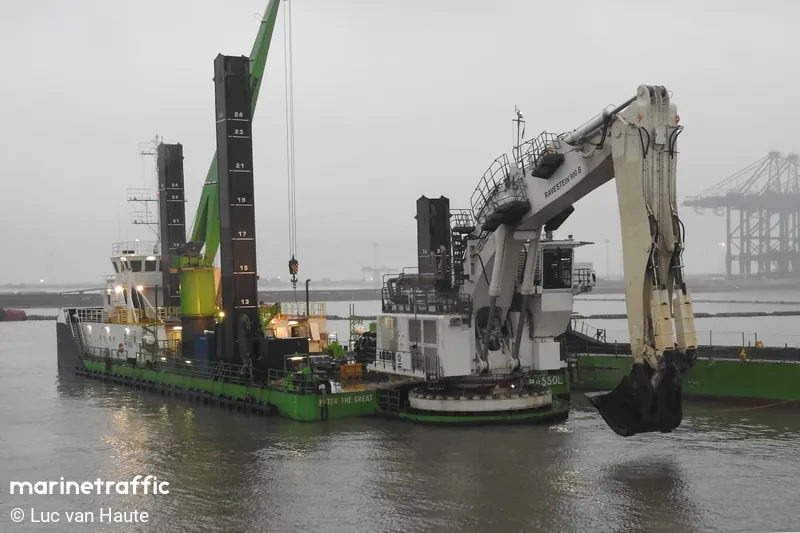
  # the giant dredger Peter-the-Great is inefficient in scraping up clay.
Peter-the-Great is a back-hoe dredger with bucket of 11m³, reaching 18.20 m dredging depth 
Clay material remained stuck in the bottom opening barges Pagadder and Sloeber
(overheard on the ship's radio)
Someone boobed in assuming the dredger-system could handle the sticky base-clays.

The barges and dredger come at high cost, £118 000 per day EdF claimed in Court, so they put a brave face on it and cut things short.  The Sloeber, Pagadder and Peter-the-Great have been sent back to work on the major shipping lanes in the Baltic and continental ports. Peter-the-Great was still in Barry Port on Sunday morning, waiting for the stormy weather to pass.

The anti-dumping movement now has a new opportunity, we in FoE believe, to re-start Court action to suspend the dumping license on grounds on no EIA - ie. the obligatory Environmental Impact Assessment. EdF can no longer threaten Cian Ciaran or other public-interest challenger with huge costs from suspending the license.

Thursday, 11 October 2018

Senedd debate turns Hinkley Mud-dumping into Political Issue

People from as far as Swansea and Llandrindod joined local protesters in the rally outside the Senedd for the Hinkley mud debate.

Though the Assembly is supposed to hold the Welsh Government to account, the debate was largely political point-scoring rather than challenging set positions.

Not one of the AMs was ready to say NRW were lying in saying the chemical and radiological results from samples taken of the mud were within “acceptable, safe limits”. The published CEFAS data show toxic metals and PCBs above the Action Level-1. That's only "acceptable, safe" if they do a detailed assessment of effects on the wildlife-ecology; neither NRW or Cefas did one.

No AM answered claims of frequent sampling in 2009, 2012 and 2017 – that the number of core samples (5 in 2009 only) was below the minimum prescribed by international rules (7-15), so parts of the mud with high pollution expected from buried drums or leaks from the nuclear plant could well have been missed.

McEvoy (South Wales Central) and other AMs railed against dumping English waste in Welsh seas, but none of them mentioned the ban on dumping waste at sea at all – Jenny Rathbone (Cardiff Central) even said Cardiff Grounds is the place for dumping construction waste.  That ban (London convention) exempts dredging from shipping lanes, but excludes dumping of clays that make up 40% of the Hinkley dredgings.

The Minister came up with a claim that we, the Welsh people, had been “consulted” over the license in 2012.  So did anyone notice - did the local AMs inform us all? Where was the full information?  They now claim the Marine Consents Unit made a decision in 2012 that no EIA was needed – how strange to introduce this so late, when there’s a legal requirement to publish the decision and associated documents.  The Minister’s statement of Oct. 2017 just said “took into account the overall EIA for the Hinkley Point C project”.  That was insufficient for the company's defence at the Cardiff High Court when they conceded doing no EIA ten days ago.

Labour politicians pontificated about ‘we must be bound by the experts’, opposition politicians that we must respect the public.  Since the debate in May, the voting indicates David Melding and David Rowlands have moved against the mud dumping, while Jane Hutt, Julie Morgan and Mike Hedges moved to support it – resulting in a fully political split in voting, a deficit of independent thinkers prepared to read the facts.